
Learn Skills. Apply Knowledge. Build Your Future.

Guest

Welcome,

|

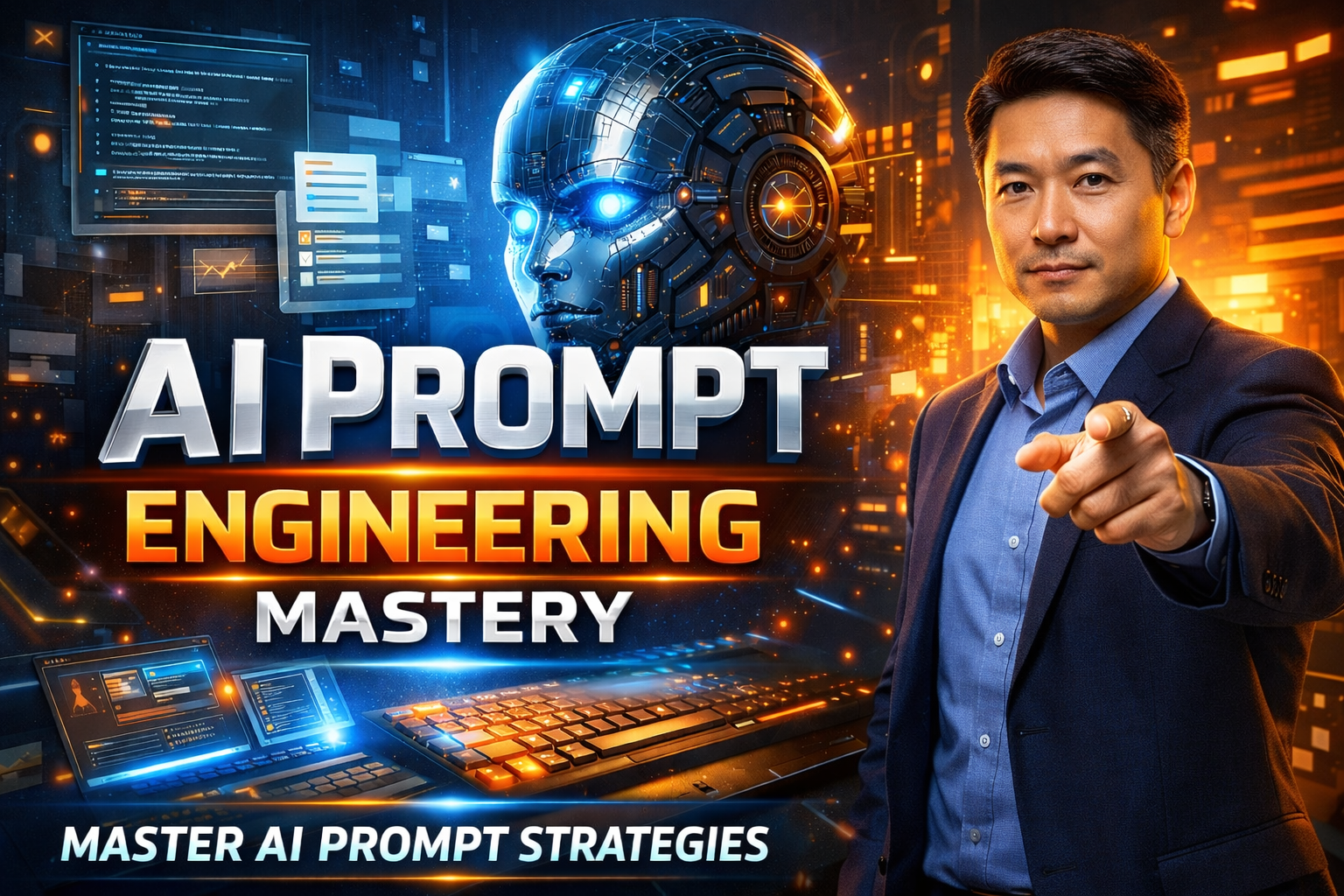
AI Prompt Engineering Mastery

Home

/

Courses

AI Prompt Engineering Mastery

Wishlist Share

About Course

Build, Structure, and Monetize Powerful AI Prompts Like a Pro

Artificial Intelligence is no longer the future — it is the present. But the real competitive advantage does not belong to people who use AI. It belongs to those who know how to engineer it.

AI Prompt Engineering Mastery is a comprehensive, step-by-step training program designed to teach entrepreneurs, creators, business owners, educators, marketers, and digital product builders how to craft high-performance prompts that generate powerful, consistent, and revenue-producing results.

This course goes far beyond basic prompt tips. You will learn how to think like an AI architect, structure prompts with precision, build repeatable frameworks, and develop scalable systems that turn AI into a strategic business asset.

Whether you are building GPT products, launching digital courses, creating content, automating workflows, or enhancing client services — this program equips you with mastery-level skills.

Show More

What Will You Learn?

  • Master the structure of high-performance AI prompts that produce consistent, professional-quality outputs
  • Design role-based and multi-layered prompts that control tone, format, and precision
  • Build reusable prompt frameworks that save time and increase productivity
  • Engineer advanced prompts for business automation, marketing, and digital product creation
  • Create and launch monetizable GPT-based tools and AI-powered digital assets
  • Optimize AI outputs using constraints, formatting controls, and refinement techniques
  • Develop scalable AI systems that enhance workflow efficiency and reduce manual effort
  • Position yourself as a Prompt Engineering specialist in the modern AI-driven economy

Course Content

1. Introduction to the AI Prompt Engineering Mastery Training Video Series
This introduction video gives an overview of the course and aims to transform AI abilities into a system for effective prompt engineering. The Introduction video lists the titles of 20 video lessons in the course: Introduction to AI Prompt Engineering Mastery Why Prompt Design Matters Understanding AI Output Patterns Basic Prompt Structures Advanced Prompt Structures Role-Based Prompting Techniques Prompt Optimization Workflows Testing and Iterating Prompts Templates and Frameworks AI Prompting for Marketing AI Prompting for Content Creation AI Prompting for Research and Planning Ethical Considerations in AI Prompting Common Mistakes and How to Avoid Them Reusable Prompt Frameworks Integrating Prompts into Workflows Scaling AI Prompting for Teams Case Studies of Successful Prompting Troubleshooting and Refining Prompts The Future of AI Prompt Engineering

  • Introduction to the AI Prompt Engineering Mastery Training Video Series
    01:45

2. Why Prompt Design Matters
Discusses the critical role of prompt design in the effective use of AI tools.

3. Understanding AI Output Patterns
Discusses the critical role of prompt design in how effectively AI tools respond to instructions. Clear and structured prompts are essential to guide AI behavior, reduce confusion, and improve the relevance of outputs.

4. Basic Prompt Structures
Discusses how basic prompt structures provide a foundation for clear communication with AI systems, moving beyond trial and error. Structured prompts help users guide AI responses with consistency and purpose.

5. Advanced Prompt Structures
Introduces advanced prompt structures that build on basic prompting techniques by adding greater control, precision, and adaptability. These structures are designed for complex tasks where clarity, consistency, and alignment are critical.

6. Role-Based Prompting Techniques
Role-based prompting is a technique where a specific role or perspective is assigned to the AI before it completes a task. This technique helps to narrow how the AI interprets instructions, shaping the tone, depth, and structure of the response. When used correctly, it improves alignment with the intended use case and supports more consistent and context-aware outputs.

7. Prompt Optimization Workflows
Focuses on improving prompt effectiveness through structured testing and refinement. Instead of randomly rewriting prompts, this approach uses a repeatable process to evaluate AI responses, identify weaknesses, and apply targeted improvements.

8. Testing and Iterating Prompts
Explains that testing and iterating prompts is essential for improving AI responses. Effective users treat prompting as a continuous process of testing, reviewing outputs, and refining instructions, rather than expecting perfect results on the first attempt. This approach helps improve clarity, consistency, and alignment with intended goals.

9. Templates and Frameworks
Introduces how templates and frameworks provide a structured way to interact with AI systems.

10. AI Prompting for Marketing
Introduces how AI prompting uses structured instructions to support marketing planning, messaging, and content development, instead of relying on generic requests. Well-crafted prompts help align AI outputs with brand voice, audience needs, and campaign goals.

11. AI Prompting for Content Creation
Discusses how to guide AI systems for planning, drafting, and refining content.

12. AI Prompting for Research and Planning
Introduces how using structured instructions, or prompts, can support information gathering, organization, and decision preparation. AI prompting for research and planning focuses on using structured instructions.

13. Ethical Considerations in AI Prompting
Discusses the importance of guiding AI responsibly to ensure outputs are accurate, unbiased, and compliant with legal and social standards. Since AI lacks ethical awareness, prompt designers must carefully frame instructions, avoid misleading content, consider audience impact, and maintain accountability and transparency.

14. Common Mistakes When Creating AI Prompts and How to Avoid Them
Recognizing and avoiding these errors can help refine prompting, save time, and produce more reliable and well-aligned AI responses.

15. Reusable Prompt Frameworks
Discusses the concept, benefits, components, types, and implementation of reusable prompt frameworks.

16. Integrating Prompts into Workflows
Discusses how incorporating AI prompts into structured processes makes the use of AI consistent and efficient for recurring tasks.

17. Scaling AI Prompting for Teams
Discusses the need for systems to enable consistent and efficient use of AI prompting across multiple users.

18. Case Studies of Successful Prompting
Introduces case studies to illustrate how structured and strategic AI prompts lead to effective outcomes.

19. Troubleshooting and refining prompts
Covers how to improve AI outputs through effective prompting techniques.

20. The Future of AI Prompt Engineering
Discusses how AI prompt engineering is evolving as AI systems become more complex and integrated into workflows.

Student Ratings & Reviews

No Review Yet
No Review Yet
Shopping cart0
There are no products in the cart!
Continue shopping